

IRS Offer in Compromise Help to Settle Your Tax Debt for Less – Better Tax Relief
Cut Your IRS Debt with the Offer in Compromise Program
At Better Tax Relief, we specialize in providing professional Offer in Compromise Help, guiding you through eligibility evaluation, financial analysis, and IRS negotiations. Our team ensures every step is handled accurately and compliantly, helping you work toward a true financial fresh start.
What Is an Offer in Compromise IRS Program?
An Offer in Compromise IRS program is a formal agreement between a taxpayer and the IRS that resolves tax debt for less than the full balance owed. The IRS evaluates your income, allowable expenses, assets, and future earning potential to determine what it can reasonably expect to collect.
While the program is legitimate and effective, the IRS denies many applications due to incomplete documentation or unrealistic offer amounts. Working with professionals helps ensure your Offer in Compromise submission meets IRS requirements and is supported by accurate financial evidence.
Who Qualifies
Taxpayers facing financial hardship or unable to pay full debt due to limited income or assets.
Program Benefit
Can reduce total tax debt to a fraction of the original balance, sometimes under 20%.
Required Documentation
Detailed financial statements, proof of income/expenses, and asset valuations.
Approval Rate
Approximately 30-40% of OIC applications are approved by the IRS.
IRS Considerations
Evaluates income, living expenses, asset equity, and future earning potential.
Without proper preparation, it’s easy to miss critical offer in compromise requirements or submit incomplete documentation, leading to rejection. That’s where professional help makes a difference, and if you’re curious about other options like IRS Installment Agreements, BTR has you covered.
Key Facts About the IRS Offer in Compromise
Who Qualifies
Taxpayers facing financial hardship or limited ability to pay
Program Benefit
May significantly reduce total tax debt
Required Documentation
Income, living expenses, assets, and future earning ability
Approval Rate
Approximately 30–40% with proper preparation
IRS Considerations
Incorrect calculations and missing documentation
If OIC is not the right solution, our team also reviews alternatives through our Tax Relief Services.




How Better Tax Relief Helps You Get Approved
Navigating the IRS Offer in Compromise process alone can be complex and time-consuming. At Better Tax Relief, our experienced professionals manage the process from start to finish, ensuring accuracy and strategic positioning.
Our Offer in Compromise Help Includes
Detailed Financial Evaluation
We analyze income, expenses, and assets to determine a realistic and IRS-acceptable offer amount.
Strategic Application
Preparation
Every Offer in Compromise IRS form is prepared carefully, supported by documentation, and reviewed for compliance.
Direct IRS
Representation
We communicate with the IRS on your behalf, respond to follow-up requests, and manage negotiations professionally.
Alternative Resolution
Planning
If an OIC is not viable, we recommend solutions such as installment agreements or temporary hardship status.
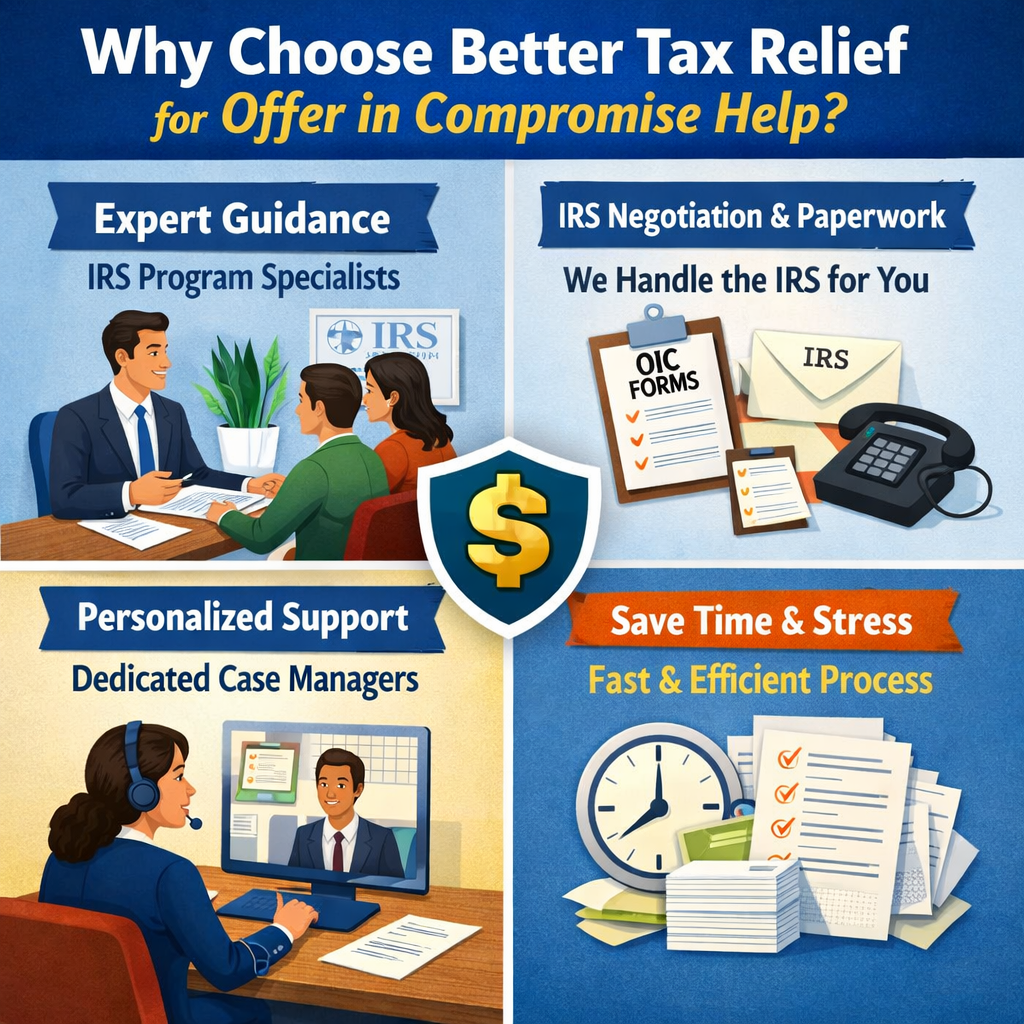
Why Choose Better Tax Relief for Offer in Compromise Help?
- Extensive experience handling IRS Offer in Compromise cases
- Personalized strategies tailored to your finances
- Accurate documentation and IRS-compliant submissions
- Transparent evaluation with no false promises
- Full-service tax relief beyond OIC
We focus on real solutions that protect your financial future
Ready to Settle Your IRS Tax Debt for Less?
Tax debt does not have to define your future. With Better Tax Relief, you receive expert Offer in Compromise Help designed to reduce stress and secure long-term relief.
Offer in Compromise FAQs
An Offer in Compromise allows eligible taxpayers to settle IRS tax debt for less than the full balance owed. The IRS evaluates your financial situation to determine whether accepting a reduced amount is more practical than attempting full collection.
Qualification depends on your income, expenses, assets, and overall financial hardship. The IRS must determine that full payment is unlikely within a reasonable timeframe.
Savings vary by case, but many approved applicants settle for significantly less than they owe. The final amount depends on what the IRS believes it can realistically collect.
The IRS typically takes between 6 and 12 months to review an application. Proper documentation and accurate calculations help avoid unnecessary delays.
You can apply on your own, but many applications are denied due to errors or missing information. Professional Offer in Compromise Help greatly improve approval chances and reduces stress.